
How to Style a Rustic Kitchen Shelf with Vintage Crockery

Begin with the shelf, not the crockery
It is tempting to start by unpacking the car boot haul and shuffling pieces about until something works. Resist that. A rustic shelf looks effortless because the structure underneath it is doing the heavy lifting, and a few practical decisions made first will save you hours of faffing later.
Give yourself at least 20cm of depth, ideally 25cm, so that a dinner plate or a chopping board can lean back without wobbling. Space shelves 30–35cm apart; anything tighter and a decent jug will not fit, anything wider and small pieces look lost. If the shelf sits above a worktop, keep the lowest one a clear 45cm above the surface, or you will be scraping your knuckles every time you chop an onion.
Finish matters too. A chalky off-white, a soft sage or a dark waxed timber all flatter old creamware, but gloss paint tends to make vintage pottery look grubby by comparison. A shallow plate rail or a slim lip along the front edge is worth adding if you have anything valuable, particularly in a busy household or one with a cat.
Build in three depths
Think of each shelf as a small stage with a back, middle and front row, then place something in each. The back row is for flat, leaning pieces: a big oval platter, a battered wooden board, a rectangular enamel tray propped against the wall. The middle row takes the tall working pieces — jugs, tins, a stoneware jar of wooden spoons. The front row is for the small, quiet things: egg cups, a stack of saucers, a tiny pot of thyme.
Vary the heights in a gentle wave rather than a staircase, so the eye travels along instead of up. Odd numbers settle best, so group in threes or fives rather than pairs. And leave gaps. A shelf packed solidly edge to edge looks like a shop display; a little breathing room makes the whole thing feel collected rather than bought.
What is worth collecting
The best rustic shelves are built from pieces that were made to be used, not admired. Look for:
- Jugs of every size — Victorian and Edwardian pitchers with a hairline crack are perfect for display and cost very little. Just do not fill them.
- Enamel jugs and tins — chipped rims add character, but rust does not. Check the inside of the rim and the base before you part with your money.
- Stoneware preserve jars with their original lids, and simple banded ware in faded blue or grey.
- Slipware and coarse country pottery — a honey-glazed mixing bowl, a ribbed pudding basin, a brown teapot.
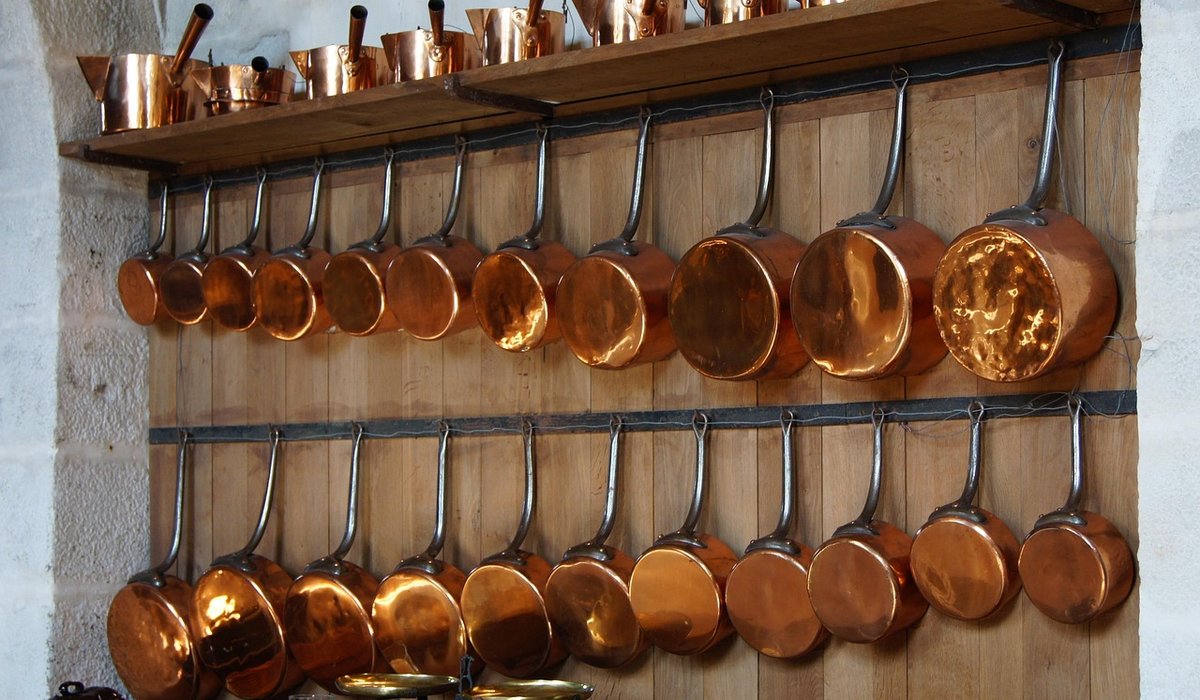
- Oddments with a job — jelly moulds, pie funnels, a copper pan, a wooden butter pat, a set of old spoons in a jar.
One rule keeps a shelf from turning into a jumble: nothing goes up there that you would be heartbroken to break. If it is irreplaceable, it belongs behind glass.
Colour, texture and the three-times rule
Rustic does not mean drab, but it does mean restrained. Choose three colours and repeat them: cream, terracotta and one accent — a faded blue, a soft green, a deep damson. If a colour appears three times across a shelf, in a jug, a tin and a cloth, the arrangement will read as deliberate even when it was not.
Texture is where the warmth comes from. Set a glossy glazed jug beside a dull tin, a chalky terracotta pot and a piece of weathered wood. The contrast does the work that pattern would in a busier room. A length of rumpled linen or a folded tea towel tucked under a stack of bowls will soften the hard line of the shelf itself.
Keep it useful and shift it with the seasons
The loveliest rustic kitchens are practical first. Decant flour, oats and tea into lidded jars, keep everyday mugs at the front within easy reach, and put the precious things up high where they are admired rather than grabbed. A shelf you have to rearrange to make a cup of tea will not stay styled for long.
Then ring the changes. In spring, small pots of hyacinth and pale jugs. Summer, jam jars of cornflowers and a bowl of strawberries. Autumn, damsons, apples and a big harvest jug. Winter, brass candlesticks, dried orange slices and dark green foliage. Swapping four or five pieces is enough to make the whole shelf feel new.
Caring for old crockery without fuss
Wash enamel by hand in warm water, never the dishwasher, and dry it immediately — trapped moisture is what starts rust. A little white vinegar lifts limescale from the inside of a jug. Crazed glazes, those fine spiderweb cracks, should be kept for display rather than food, particularly on pieces made before the 1960s. Do not stack heavy stoneware on delicate china, and keep the whole shelf away from direct steam and strong sunlight, both of which will fade a glaze faster than anything else. Handled gently, a good shelf of old crockery will outlast most of what is sold as new.

Joeby Ragpa
This template is so awesome. I didn’t expect so many features inside. E-commerce pages are very useful, you can launch your online store in few seconds. I will rate 5 stars.
ReplyAlexander Samokhin
This template is so awesome. I didn’t expect so many features inside. E-commerce pages are very useful, you can launch your online store in few seconds. I will rate 5 stars.
ReplyChris Root
This template is so awesome. I didn’t expect so many features inside. E-commerce pages are very useful, you can launch your online store in few seconds. I will rate 5 stars.
Reply