
Choosing Curtains and Blinds for Cottage Windows

Reading Your Cottage Windows
Before you fall for a fabric, spend time with the window itself. Cottage windows are rarely square, seldom identical and often set deep into thick stone or cob walls. A deep reveal changes how a curtain hangs and how much light you lose at the sides. Timber frames may be uneven, old latches stick out, and a low lintel can make a full-length pair feel overwhelming. Measure width and drop in three places — top, middle and bottom — and use the smallest figure for blinds and the largest for curtains that need to overlap. If the wall is lumpy, fix a painted timber batten first. In listed or conservation areas, check what alterations are permitted before drilling anything.
Light, Privacy and the Daily Rhythm
Cottage rooms often face two ways: a sunny garden front and a shady lane behind. South-facing windows need fabrics that resist fading, so choose wool and linen blends that age gracefully or linings with UV protection. North-facing rooms can take warmer, deeper colours — a soft ochre, a faded rose, a muted sage — to keep the space from feeling cold. Privacy is not just about the street. In a village, a passer-by can see straight into a low window. Café curtains, hung on a slim pole across the lower half of the window, give you daylight above and seclusion below. For bedrooms, a blackout lining is worth the extra expense, but keep the cottage feel with a natural face fabric and a simple heading. If the window is overlooked only at certain times, top-down bottom-up blinds let you drop the top for privacy while keeping the view at eye level.
Fabrics That Belong in a Country Interior
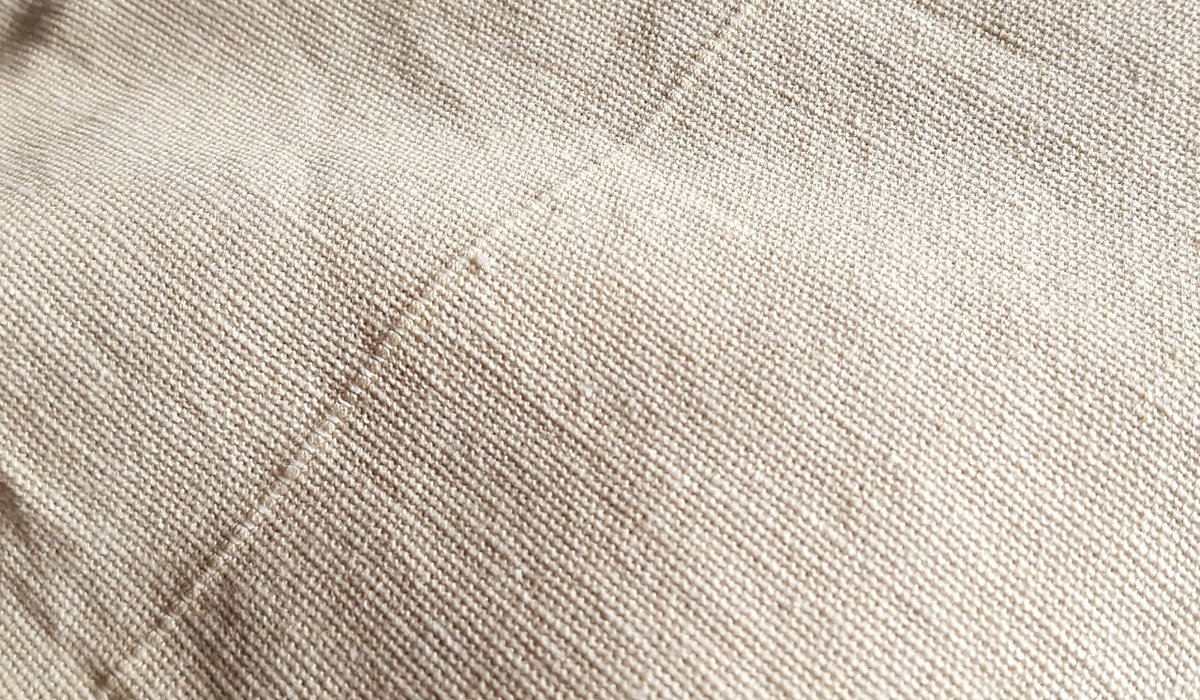
Natural fibres sit best in old houses. Linen softens with every wash and hangs with a gentle, irregular drape. Cotton is easy to care for and takes small-scale prints beautifully. Wool and wool blends add warmth and quietness, ideal for draughty sash or casement windows. Hemp and cotton ticking are hard-wearing and suit a rustic, unpretentious look. Avoid stiff, shiny synthetics unless they are hidden in the lining; they rarely improve with age. Pattern should relate to the room, not fight it. In a small cottage, a ditsy floral, a narrow stripe or a simple check will feel charming, while a huge repeat will swamp the window and the walls. If you want a bold colour, use it on a blind or a single pair of curtains, and keep the rest of the scheme calm. Think of seasonal food in the same way: a few strong ingredients, handled simply, taste better than everything at once.
Blinds for Awkward Recesses and Small Panes
Blinds are the quiet heroes of cottage windows. A Roman blind in washed linen looks at home in a kitchen, bathroom or boot room. It stacks neatly at the top, so you keep the maximum light, and it can be mounted inside the recess if the reveal is deep enough. Roller blinds are practical and inexpensive, but choose a fabric-covered roller rather than a plain white one; it looks softer and more considered. In a bedroom, a Roman blind with a blackout lining gives privacy without the bulk of heavy curtains. For smaller windows, a café-style blind covers the lower half only, leaving the top clear. Timber slatted blinds can work in a garden room or study, but keep the slats slim and the colour close to the woodwork, so they recede rather than dominate. Always check that the blind does not clash with a window that opens inwards — casement windows need clearance, and a blind can block the handle.
Headings, Linings and Period Proportions
The heading decides how a curtain behaves. Pencil pleat is forgiving and suits most cottage windows. Pinch pleat is more formal but can look wonderful in a sitting room or dining room. Eyelet headings need a sturdy pole and a straight run, and they can be tricky in a shallow recess, so measure carefully. For width, allow at least one and a half times the window width for pencil pleat, and two to two and a half times for pinch pleat, so the curtains look generous when closed. For drop, decide between sill-length, which is practical above a radiator or window seat, and floor-length, which adds elegance and keeps out draughts. Floor-length curtains should just touch the floor or break by a centimetre or two — no more, or they will gather dust. Interlining adds body, warmth and sound insulation; it is a worthwhile extra in a bedroom or a room that faces a cold wind. A simple pelmet can hide an ugly track, but in a small cottage, less is usually more.
Seasonal Tweaks and Gentle Maintenance
Cottage living is about adapting to the year, and window dressings can change with it. In winter, add a thermal lining or a pair of wool curtains to a north-facing room; in summer, swap to a lightweight cotton or linen blind and let the breeze through. Take curtains down at the end of the season and brush the pleats with a soft brush. Wash according to the fabric — linen and cotton can usually be gently washed, but wool and interlined curtains are better dry-cleaned. Blinds need only a light dusting with a microfibre cloth; avoid soaking wooden slats. Mend a loose hem or a pulled pleat before it becomes a bigger job, and store spares of the same fabric for patching. Like a good seasonal recipe, the best window dressings are simple, well-made and looked after with patience. Get the proportions and the light right, and your cottage windows will feel as comfortable as the rooms behind them.

Joeby Ragpa
This template is so awesome. I didn’t expect so many features inside. E-commerce pages are very useful, you can launch your online store in few seconds. I will rate 5 stars.
ReplyAlexander Samokhin
This template is so awesome. I didn’t expect so many features inside. E-commerce pages are very useful, you can launch your online store in few seconds. I will rate 5 stars.
ReplyChris Root
This template is so awesome. I didn’t expect so many features inside. E-commerce pages are very useful, you can launch your online store in few seconds. I will rate 5 stars.
Reply